AI Advancements Driving New Hardware Demands for Daily Web Tools
Written by Ulrich Koch · Jul 27, 2026
AI Advancements Driving New Hardware Demands for Daily Web Tools
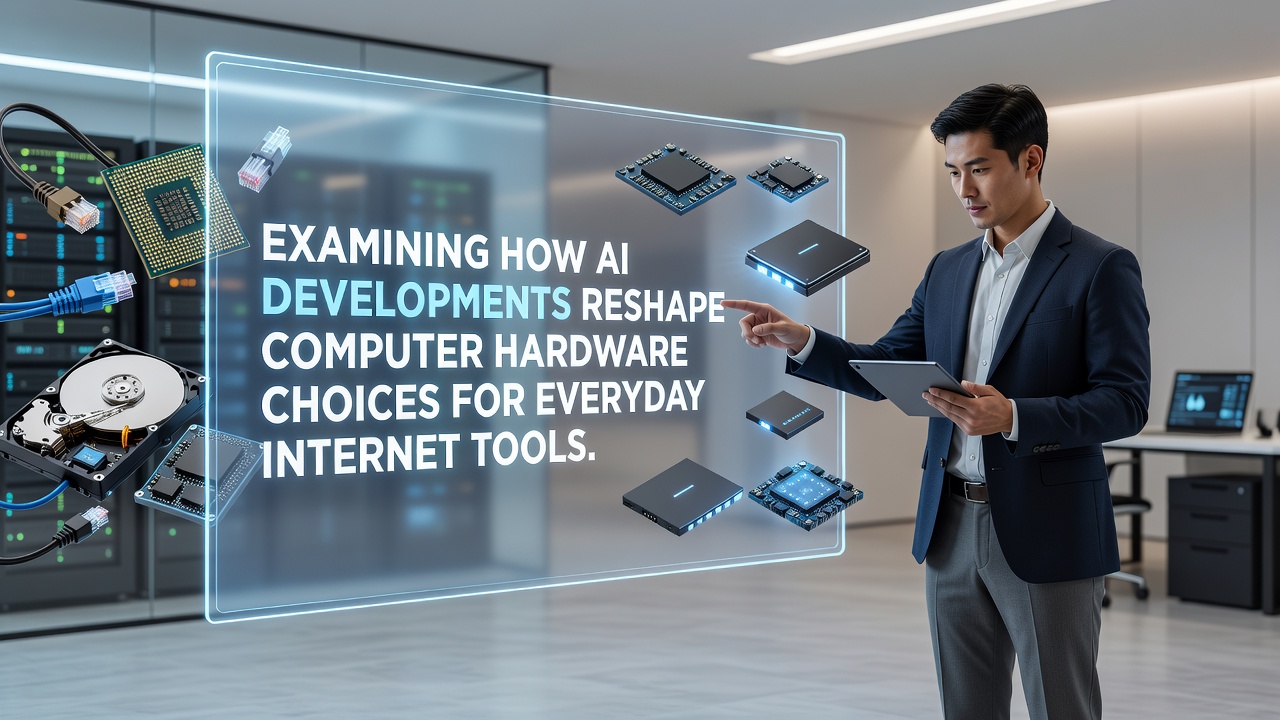
Artificial intelligence features now integrate into common internet applications such as web browsers, video conferencing platforms, and search engines, which creates measurable shifts in the hardware specifications that users select for their devices. These tools rely on local processing for tasks like real-time translation, content summarization, and image generation, and that requirement pushes demand toward processors with dedicated neural processing units alongside increased system memory and storage bandwidth. Observers note that manufacturers responded by embedding AI accelerators directly into consumer CPUs and GPUs rather than treating them as optional add-ons.
Core Hardware Adjustments for AI-Enabled Internet Applications
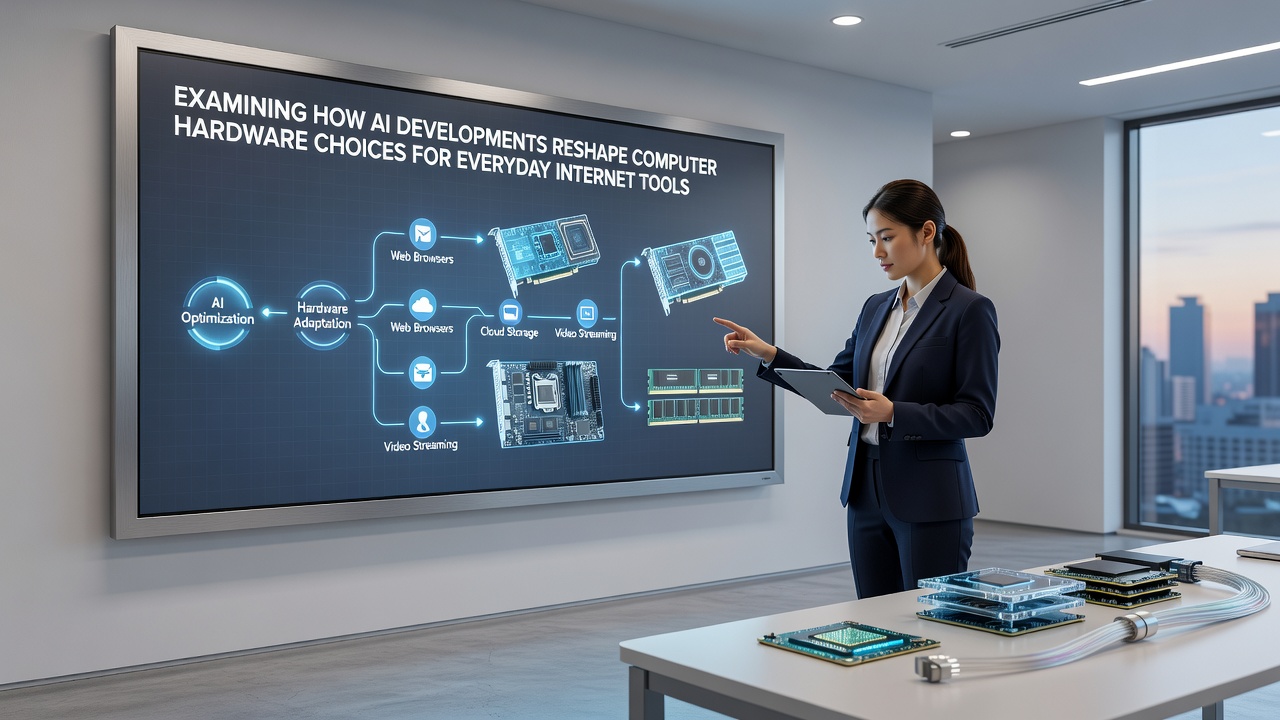
Everyday internet tools increasingly execute machine learning models on the device instead of sending all data to remote servers, and this change alters the balance between central processing units, graphics processors, and system RAM. Devices handling browser-based AI assistants require at least 16 gigabytes of memory to keep models resident without constant swapping to storage, while video tools that apply background effects or noise cancellation benefit from graphics cards with dedicated tensor cores. Research indicates that average configurations sold for general web use in 2025 already reflected these patterns, with sales data showing higher adoption of systems containing integrated NPUs.
Storage choices also evolved because AI features generate temporary caches of model weights and user-specific adaptations. Solid-state drives with higher write endurance and faster sequential speeds became preferred over older mechanical drives, since repeated model loading and saving occurs during routine sessions. Those who studied market figures from mid-2026 reported that shipments of NVMe drives with capacities starting at one terabyte rose in tandem with AI feature rollouts in popular browsers and productivity suites.
Regional Data and Industry Reports from July 2026
By July 2026, statistics compiled by the European Commission's Joint Research Centre showed that consumer desktop and laptop purchases across member states included AI-capable hardware in over 45 percent of units, up from 28 percent the previous year. The same dataset linked this growth to specific software updates that introduced on-device inference in web-based email clients and document editors. Parallel figures from Australia's Commonwealth Scientific and Industrial Research Organisation indicated comparable trends in the Asia-Pacific region, where educational institutions upgraded lab computers to support AI-assisted research browsers.
Hardware vendors adjusted product lines accordingly. Processors released in the first half of 2026 featured wider vector units and higher memory channels to accommodate simultaneous model execution alongside standard operating system tasks. A National Science Foundation report documented that university procurement offices prioritized systems with at least eight-core CPUs and discrete graphics options when refreshing student computing labs.
Practical Effects on Common User Workflows
Video calls that once ran adequately on integrated graphics now show smoother performance when the hardware includes dedicated AI silicon for background segmentation and audio enhancement. Users running multiple browser tabs with embedded AI summarization tools experience fewer interruptions when their systems contain unified memory architectures that allow quick data sharing between CPU and NPU. Those configurations reduce latency during live translation or predictive text generation within web applications.
Power consumption patterns changed as well. Devices equipped with efficient AI accelerators complete inference tasks with lower overall energy draw than older systems relying on general-purpose cores, according to measurements released by Canadian research groups tracking household electronics. This efficiency matters for portable devices that stay connected to internet services throughout the workday.
Supply Chain and Component Availability
Component manufacturers scaled production of memory modules and storage controllers to match the new demand profile. Industry associations tracking semiconductor output noted that allocations for high-bandwidth memory suited to AI workloads increased steadily through the second quarter of 2026. Retail channels reflected these adjustments through expanded stocking of mid-range laptops that previously targeted basic web browsing but now carried specifications aligned with local AI execution.
Compatibility layers within operating systems further supported these transitions. Updates released around the same period enabled automatic offloading of compatible AI tasks to available accelerators, which encouraged broader hardware adoption without requiring users to manage specialized drivers manually.
Conclusion
Hardware choices for everyday internet tools continue to reflect the growing presence of on-device AI capabilities. Memory capacity, processor architecture, and storage performance now align more closely with the requirements of local model inference, and data from multiple regions confirm that these patterns appeared in purchasing records by July 2026. The resulting configurations support smoother operation of AI-enhanced browsers, communication platforms, and productivity applications while maintaining compatibility with conventional web workloads.