Biometric Sensor Progress Transforming Routine Computing Input Tools
Written by Yara Washington · Aug 13, 2026
Biometric Sensor Progress Transforming Routine Computing Input Tools
Biometric sensor technology has moved steadily into standard input devices such as mice, keyboards and trackpads, where manufacturers embed fingerprint readers, heart rate monitors and vein pattern scanners directly into hardware that people use for daily tasks. These integrations allow systems to authenticate users during routine clicks and keystrokes without requiring separate steps or dedicated hardware, and data from industry reports shows adoption rates rising across consumer and enterprise markets through 2025 and into August 2026.
Core Technologies Driving Integration
Capacitive fingerprint sensors now appear in many wireless mice because they fit within slim device profiles while delivering scan times under 200 milliseconds, and optical sensors combined with infrared illumination enable vein recognition on keyboard wrist rests where users rest their palms naturally. Researchers at institutions across North America and Europe have documented how these components consume minimal power, often drawing less than 50 milliwatts during active scanning, which supports extended battery life in portable peripherals. Manufacturers achieve this by embedding the sensors flush with surface materials so the overall form factor remains unchanged for users who type or navigate for hours each day.
Everyday Applications in Security and Workflow
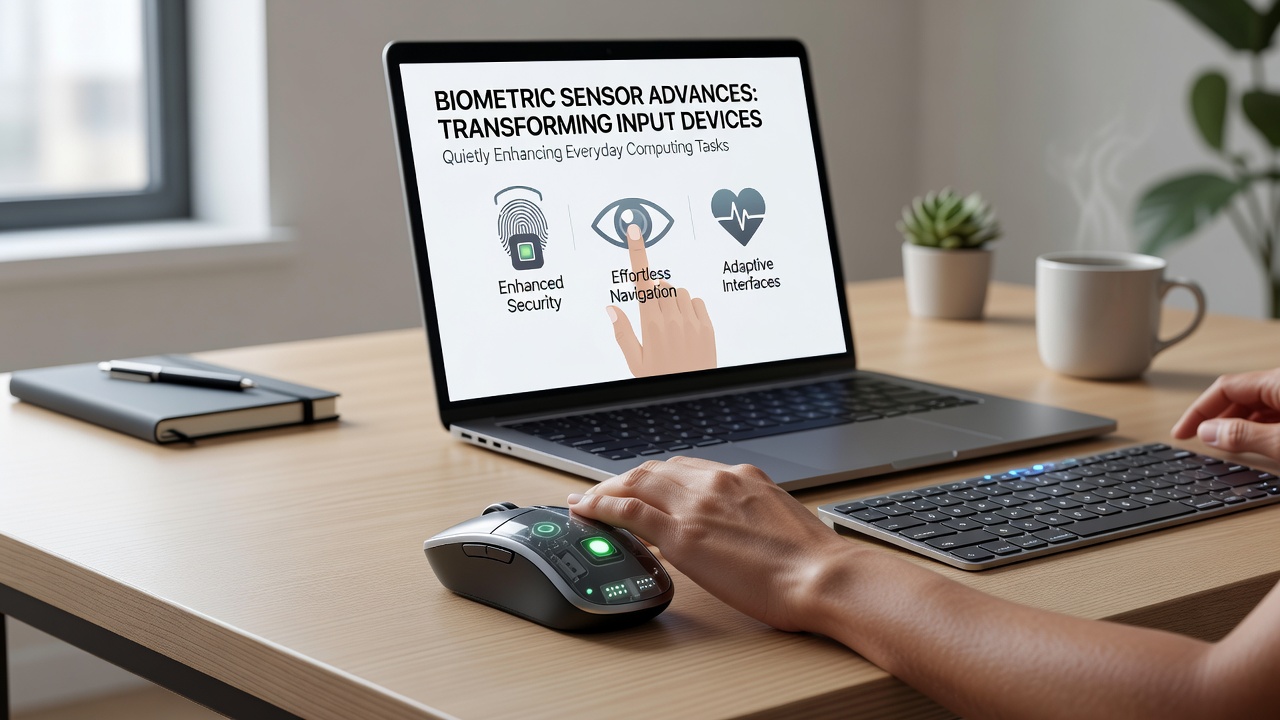
Workstations equipped with biometric mice permit continuous user verification during file access and document signing, reducing reliance on password entry while maintaining audit trails that comply with standards from regulatory bodies such as the National Institute of Standards and Technology. In office environments, keyboards fitted with electrocardiogram electrodes capture heart rate variability during long typing sessions, feeding data into health monitoring applications that flag irregular patterns without interrupting workflow. One study from Australian academic teams revealed that such passive collection improves compliance with wellness programs because employees do not need to pause tasks for separate measurements.
Gesture recognition built into advanced trackpads uses depth-sensing cameras alongside capacitive arrays, allowing users to issue commands through subtle finger movements that the system interprets alongside traditional pointing actions. European Union research initiatives have tracked deployment of these features in educational laptops, where students complete assignments faster when biometric shortcuts replace menu navigation. The technology processes signals locally on embedded chips to keep response times low and limit data transmission to external servers.
Hardware Evolution Across Device Categories
Laptop manufacturers have begun placing fingerprint readers on touchpads rather than separate buttons, because the larger surface area permits multiple finger positions that increase recognition accuracy rates above 99 percent in controlled tests. External keyboards for desktop setups incorporate similar modules beneath keycaps, and companies report that production costs have dropped enough to include the features in mid-range models sold in retail channels. Observers note that this widespread availability stems from supply chain improvements in sensor miniaturization that began accelerating after 2023.
Wireless mice now frequently bundle multi-factor options where fingerprint data combines with behavioral biometrics such as click rhythm analysis, creating layered security without extra user effort. Data collected by Canadian research groups indicates that these combined systems detect unauthorized access attempts within three seconds on average, prompting automatic session locks that protect sensitive files during shared workstation use. The same sensors support accessibility functions, such as adaptive click sensitivity based on detected hand tremors, which benefits users with motor impairments during prolonged computer sessions.
Standards and Measurement Practices
International standards organizations have updated testing protocols to cover biometric performance in input devices, specifying false acceptance and rejection rates under varying temperature and humidity conditions that match typical office and home environments. Reports from bodies in Asia and the Americas show that devices meeting these benchmarks maintain consistent operation across climates, with calibration routines handled automatically through firmware updates delivered over standard connection protocols. This regulatory framework encourages broader manufacturer participation while giving buyers measurable criteria for product selection.
Conclusion
Biometric sensor incorporation into everyday input devices continues to expand through refined hardware designs and supporting software frameworks, with ongoing developments tracked through August 2026 demonstrating steady performance gains and wider availability across consumer segments. The changes streamline authentication and monitoring tasks that once required separate tools, while preserving familiar interaction patterns for people who rely on keyboards and pointing devices for work and personal computing.