Hardware Developments Facilitating Independent AI Model Execution on Local Systems
Written by Yara Washington · Aug 6, 2026
Hardware Developments Facilitating Independent AI Model Execution on Local Systems
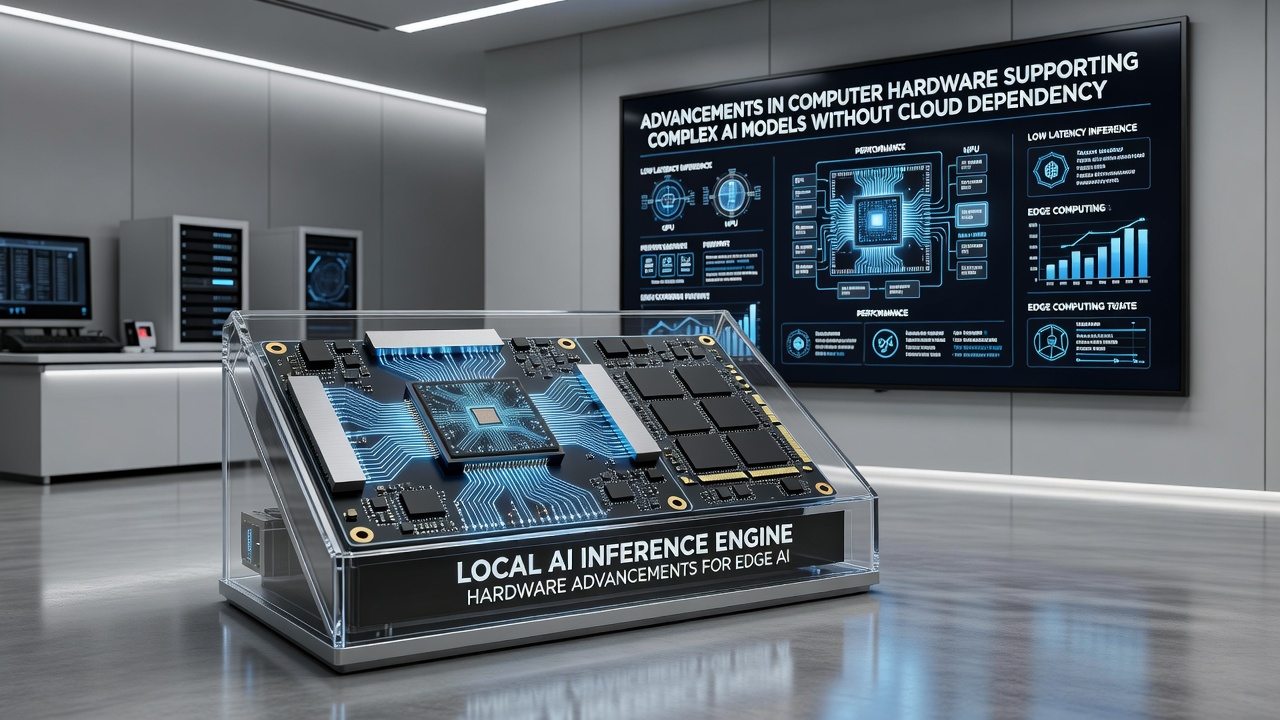
Specialized processors and memory architectures have transformed the landscape for running sophisticated AI models directly on individual devices, and data from industry reports shows substantial growth in on-device inference capabilities since 2023. Manufacturers have integrated neural processing units into mainstream CPUs and GPUs, which allows models with billions of parameters to operate without constant external server connections. These changes stem from iterative improvements in chip design, fabrication processes, and software optimization layers that reduce latency while maintaining accuracy across tasks like natural language processing and image generation.
Specialized Chip Architectures and Their Role
Companies such as NVIDIA, AMD, and Intel have released successive generations of accelerators that incorporate tensor cores and matrix engines optimized for AI workloads, and researchers note that these units deliver performance gains measured in teraflops per watt. Apple silicon and Qualcomm Snapdragon platforms now include dedicated neural engines that handle transformer-based models locally, which eliminates the need for round-trip data transfers to remote data centers. As of August 2026, new releases from multiple vendors feature process nodes below three nanometers that pack more compute elements into smaller footprints, enabling sustained operation of large language models on laptops and workstations.
Memory bandwidth improvements play an equally critical part because high-bandwidth memory stacks and LPDDR5X configurations supply the data rates required by attention mechanisms in modern architectures. Studies from semiconductor research groups indicate that these memory subsystems cut training and inference times by factors of three to five compared with earlier DDR4 implementations, and this efficiency supports longer context windows without external storage dependencies.
Power Efficiency and Thermal Management Advances
Energy consumption per inference operation has dropped significantly due to architectural refinements and voltage scaling techniques, which means devices can sustain complex computations on battery power for extended periods. Engineers at major hardware firms have introduced dynamic precision formats that switch between FP16, INT8, and lower-bit representations based on task requirements, and measurements published by academic labs confirm accuracy retention above 95 percent in most benchmarks. Cooling solutions have evolved in parallel with vapor chamber designs and microfluidic channels that dissipate heat from dense compute clusters, allowing continuous operation without throttling that previously limited model size on consumer hardware.
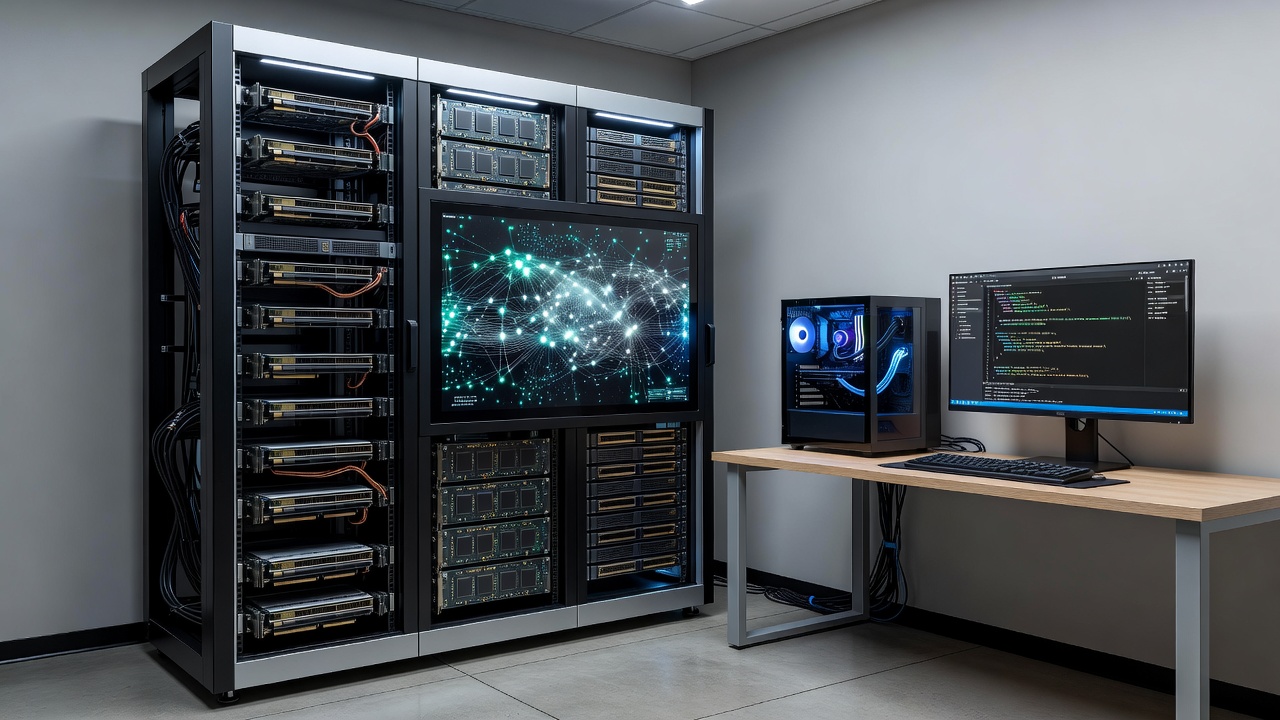
These thermal and power advances have direct implications for deployment in environments where connectivity is unreliable or data sovereignty requirements prohibit cloud transmission. Observers note that edge servers and personal workstations now run models previously reserved for hyperscale facilities, and quantitative data from 2025 field trials show latency reductions of 60 to 80 percent when inference occurs locally.
Software-Hardware Co-Design and Model Optimization
Frameworks such as ONNX Runtime, TensorRT, and Core ML have matured to exploit specific hardware features automatically, which means developers compile models once and achieve near-peak utilization across diverse silicon platforms. Quantization and pruning techniques reduce parameter counts while preserving functional performance, and evidence from multiple university studies demonstrates that optimized variants of models like Llama and Stable Diffusion execute at interactive speeds on mid-range GPUs released in 2024 and 2025. Compilation toolchains now incorporate hardware-aware search algorithms that select optimal operator implementations, and this automation shortens the path from research prototype to local deployment.
Case examples include medical imaging workstations that process volumetric scans using on-device segmentation models and financial analysis tools that run risk simulations without transmitting proprietary datasets. Industry organizations tracking semiconductor shipments report that units equipped with dedicated AI accelerators accounted for over 40 percent of premium laptop sales in the first half of 2026, reflecting broader adoption across professional and consumer segments.
Current Landscape and Future Trajectories
Integration of AI capabilities into system-on-chip designs continues at pace, with upcoming platforms expected to double effective throughput again through architectural extensions and new interconnect standards. Government research initiatives in the United States and the European Union have funded collaborative projects that benchmark local AI performance against cloud baselines, and results released in mid-2026 highlight parity in accuracy alongside clear advantages in privacy and responsiveness. Those who track component roadmaps anticipate further convergence between mobile and desktop silicon, which will expand the range of viable standalone applications.
Supply chain data also shows increased availability of high-capacity solid-state drives paired with AI accelerators, supporting the storage needs of multi-gigabyte model weights on single machines. This combination removes previous bottlenecks that forced reliance on remote resources for anything beyond lightweight tasks.
Conclusion
Collectively, these hardware developments have established a viable pathway for complex AI operations that remain fully contained within local systems. Performance metrics, energy profiles, and software tooling have all advanced to the point where dependency on continuous cloud connectivity is no longer a technical requirement for many use cases. Continued refinement of fabrication, memory, and co-design methodologies will likely sustain this trajectory through subsequent product cycles.