Heterogeneous Processor Designs Reshaping Electricity Demands in Modern Computing Facilities
Written by Quinn Lange · Jul 6, 2026
Heterogeneous Processor Designs Reshaping Electricity Demands in Modern Computing Facilities
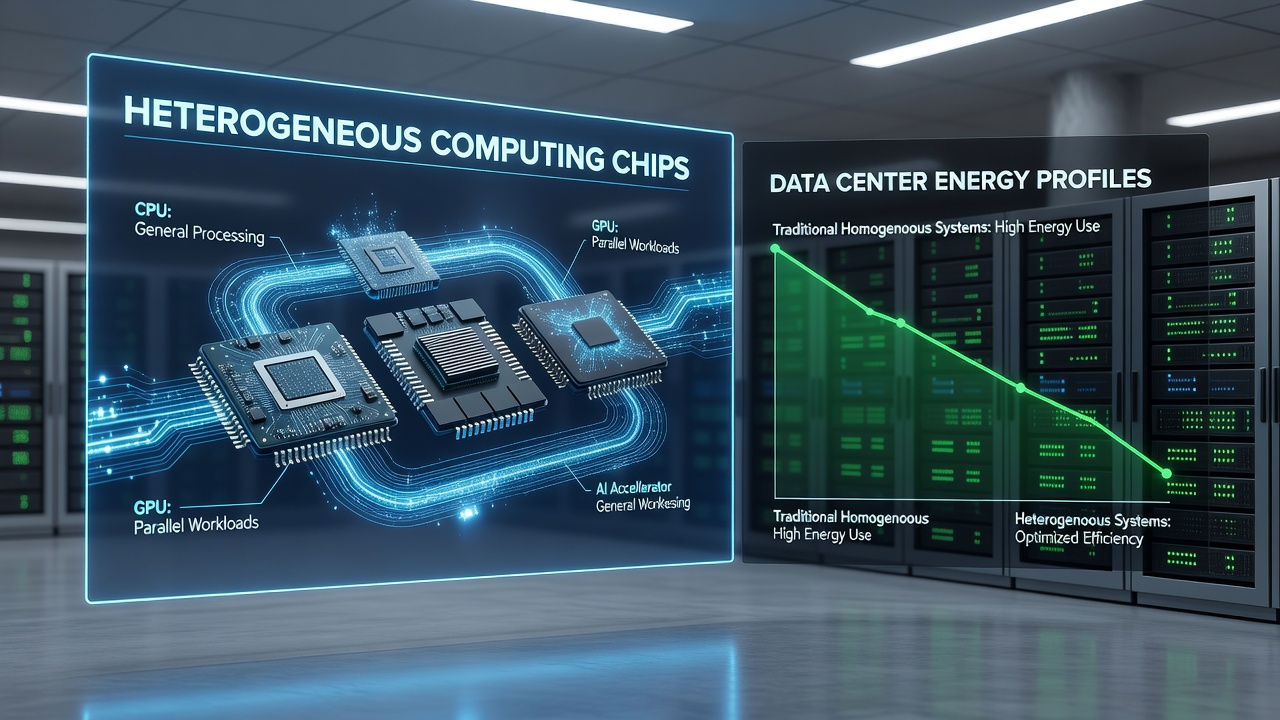
Data centers have long relied on uniform central processing units to handle every task from simple queries to complex simulations, yet the introduction of heterogeneous computing chips has begun altering those energy patterns in measurable ways. These systems combine traditional CPUs with graphics processing units, tensor processing units, field-programmable gate arrays, and other accelerators so that each workload runs on hardware best suited to its demands, and power draw adjusts accordingly rather than remaining fixed at peak levels across all operations.
Understanding the Architecture Shift
Heterogeneous designs place multiple processor types on the same server or within tightly connected nodes, allowing software schedulers to route matrix multiplications to tensor cores while directing sequential logic to general-purpose cores. Observers note that this division reduces idle power because specialized units can power down when not needed, whereas older uniform setups kept entire racks drawing consistent current even during lighter periods. Research from institutions such as the Massachusetts Institute of Technology has documented cases where mixed-architecture servers achieved lower total energy per completed job compared with CPU-only equivalents running the same code.
Figures released by the United States Department of Energy in early 2026 indicated that data centers accounted for roughly 4 percent of national electricity consumption, with projections showing continued growth unless efficiency measures accelerated. Heterogeneous chips address part of that trajectory by matching hardware capabilities to task requirements, which cuts both peak demand and overall kilowatt-hour totals in facilities that adopt them at scale.
Energy Profile Changes in Practice
Power usage effectiveness, a common metric that divides total facility energy by energy delivered to IT equipment, has shown modest improvements in sites that transitioned portions of their fleets to heterogeneous configurations. The reality is that GPUs and similar accelerators often deliver higher performance per watt for parallel workloads, so the same volume of computation finishes faster and leaves less time for background processes to consume power. Australian energy regulators tracking large-scale computing operations reported similar trends in facilities serving artificial intelligence training clusters during the first half of 2026.
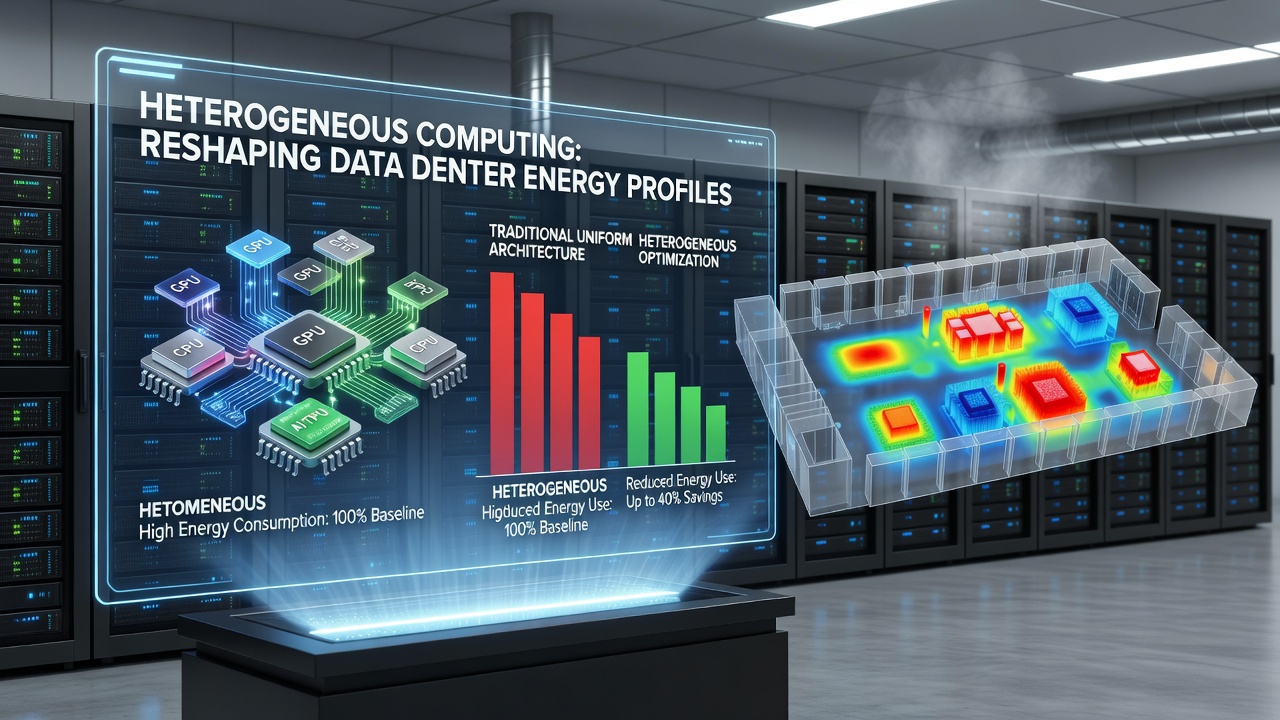
Yet the picture includes added complexity because accelerators themselves require supporting memory, interconnects, and cooling that can offset some gains if not managed carefully. Engineers at several commercial operators have adjusted rack layouts and liquid cooling loops to keep new chip mixes within thermal envelopes that older air-based systems could not support efficiently. Those adjustments have allowed overall site energy profiles to flatten rather than spike during intensive training runs.
Workload-Specific Impacts
Training large language models once dominated by uniform CPU clusters now shifts substantial portions to GPU and TPU arrays, and measurements taken at multiple sites reveal shorter job durations that translate directly into lower cumulative energy. Inference workloads, by contrast, sometimes favor lower-power FPGAs or edge-oriented accelerators that draw fractions of the current required by full training hardware. Data from the International Energy Agency’s 2025 review of global data center trends highlighted how such task segmentation contributes to more predictable daily load curves, easing strain on regional grids during evening peak hours.
Network traffic patterns also evolve when heterogeneous chips handle compression, encryption, or packet inspection locally instead of pushing every packet to a central CPU. This localization reduces the energy spent moving data across switches and routers, an effect quantified in studies conducted at Canadian research universities focused on high-performance networking. The combined result is an energy profile that rises and falls with actual computational intensity rather than remaining elevated around the clock.
Operational Adjustments and Monitoring
Facility operators have introduced finer-grained power capping and dynamic voltage scaling that respond to the presence of multiple chip types within each chassis. Software stacks now track energy at the accelerator level, enabling alerts when a particular workload begins drawing beyond expected thresholds. European grid operators working with large cloud providers noted in mid-2026 that such visibility helps balance supply and demand on an hourly basis, particularly in regions where renewable generation fluctuates with weather patterns.
Maintenance schedules have adapted as well, because heterogeneous systems often contain components with differing lifespans and failure modes. Predictive analytics that factor in both performance counters and power telemetry allow technicians to service accelerators before efficiency degrades, preserving the energy advantages these chips were selected to deliver.
Conclusion
Heterogeneous computing chips continue to influence how data centers consume and report electricity, with documented shifts in peak loads, total consumption, and load predictability appearing across multiple continents. Continued deployment will depend on further refinements in scheduling software, cooling infrastructure, and grid coordination, all of which remain active areas of measurement and adjustment as of July 2026.