How Miniaturized AI Chips Are Transforming Portable Gadget Capabilities
Written by Quinn Lange · Aug 20, 2026
How Miniaturized AI Chips Are Transforming Portable Gadget Capabilities
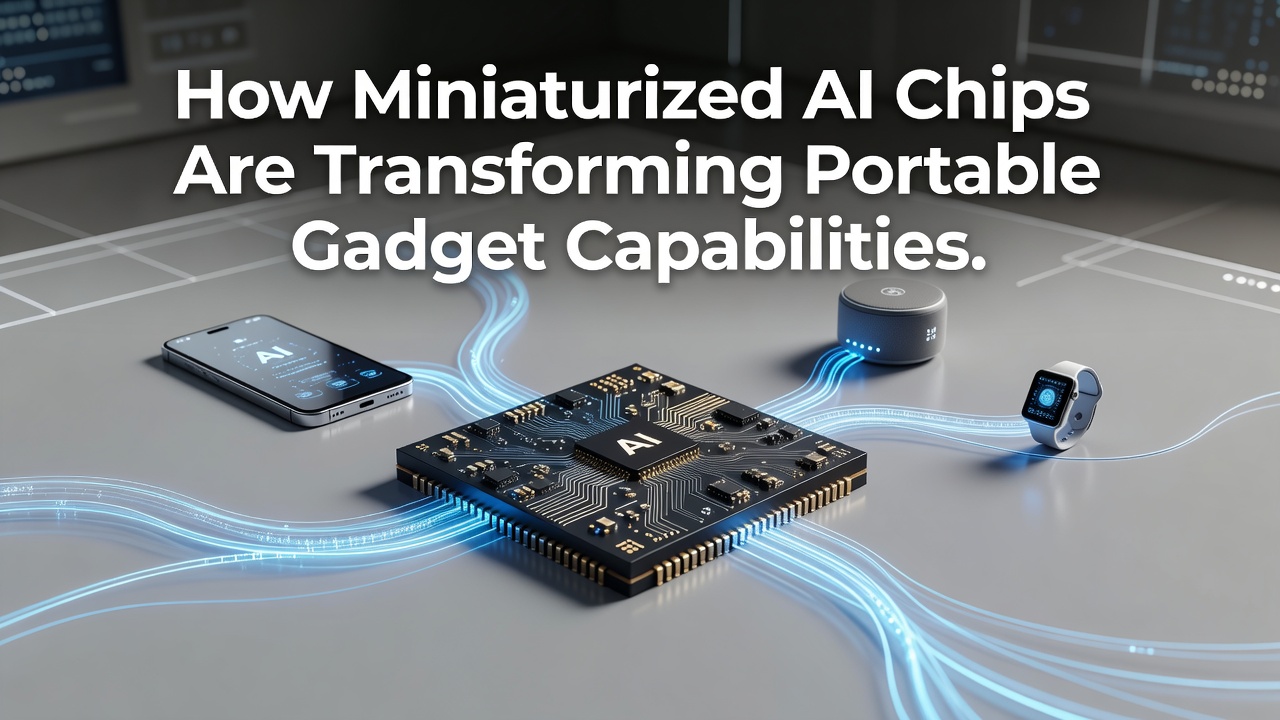
Developments in semiconductor design have produced AI chips small enough to fit inside smartphones, tablets, and wearable devices while delivering substantial processing power for machine learning tasks, and these components handle neural network computations directly on the hardware rather than relying on cloud connections. Data from industry reports show that shipments of such chips reached several million units by mid-2025, with further growth projected through 2026 as manufacturers integrate them into new product lines.
Core Technology Behind the Size Reduction
Engineers at research institutions have refined transistor architectures and adopted advanced packaging techniques that pack billions of elements into areas measured in square millimeters, and this approach combines specialized tensor cores with low-power memory interfaces to maintain efficiency during extended operation. Studies conducted at universities in North America and Europe indicate that power consumption for inference tasks has dropped by factors of ten compared with earlier generations, allowing batteries in portable gadgets to last through full days of continuous AI-assisted use.
Materials such as gallium nitride and silicon carbide contribute to thermal management in these compact designs, while fabrication processes at nodes below five nanometers support higher clock speeds without excessive heat buildup. Observers note that collaborations between foundries in Taiwan and design firms in the United States have accelerated production timelines, resulting in multiple chip variants released for consumer electronics during 2025.
Applications Across Smartphones and Tablets
Portable gadgets now perform real-time image recognition, language translation, and predictive text generation locally thanks to dedicated AI accelerators embedded in their processors, and this capability reduces latency while preserving user data within the device. Figures released by semiconductor trade associations reveal that over sixty percent of flagship smartphones introduced after January 2025 incorporated such chips as standard features.
Manufacturers have embedded these components into camera systems for computational photography that adjusts exposure and focus frame by frame, and similar hardware supports on-device video analysis that identifies objects or tracks movement without external servers. In August 2026, several tablet models showcased at industry events demonstrated multi-hour sessions of AI-driven video editing performed entirely on the portable hardware.
Expansion into Wearables and Medical Devices

Smartwatches and fitness bands utilize miniaturized AI chips to process biometric signals such as heart rate variability and movement patterns, enabling immediate feedback on physical activity and sleep quality, while researchers at institutions across the European Union have documented accuracy improvements in anomaly detection that reach ninety-five percent in controlled trials. These chips filter raw sensor data before transmission, which conserves bandwidth and extends battery intervals between charges.
Medical monitoring equipment designed for home use incorporates the same technology to track vital signs continuously and alert users to irregularities through pattern recognition algorithms running on the embedded hardware. Reports from health technology evaluations in Canada and Australia highlight reduced hospital readmission rates when patients rely on such portable systems for ongoing condition management.
Challenges in Manufacturing and Integration
Production of these chips requires precise lithography equipment and cleanroom facilities that limit the number of suppliers capable of meeting volume demands, and supply chain analyses from government agencies indicate occasional shortages that affect device release schedules. Engineers address electromagnetic interference and signal integrity issues through layered shielding and optimized circuit layouts that maintain performance in crowded portable enclosures.
Software frameworks optimized for these architectures allow developers to deploy trained models efficiently, and compatibility layers ensure that applications written for one chip variant function across multiple hardware platforms from different vendors. Data compiled by academic consortia show that training times for edge-specific models have shortened as toolchains mature.
Future Directions and Ongoing Research
Work at laboratories in Asia and the Middle East focuses on stacking multiple AI processing layers vertically to increase capability without enlarging the footprint, and early prototypes demonstrate simultaneous handling of vision, audio, and sensor fusion tasks within single packages. Regulatory bodies in various regions continue to evaluate safety standards for devices that perform autonomous decisions based on local AI inference.
Integration with emerging communication standards supports seamless handoff between on-device processing and occasional cloud assistance when additional resources prove necessary, and this hybrid approach balances speed with access to larger datasets. Industry forecasts project continued density increases that will bring even more sophisticated functions to gadgets carried daily.
Conclusion
Miniaturized AI chips have expanded the functional range of portable gadgets by enabling local execution of complex algorithms that previously required remote servers, and ongoing refinements in design and fabrication sustain this trend across consumer and specialized equipment categories. Evidence from multiple studies and production records confirms measurable gains in speed, privacy, and energy efficiency that define current device capabilities.