Machine Learning Algorithms Drive Improvements in Portable Device Battery Efficiency
Written by Ulrich Koch · Jul 2, 2026
Machine Learning Algorithms Drive Improvements in Portable Device Battery Efficiency
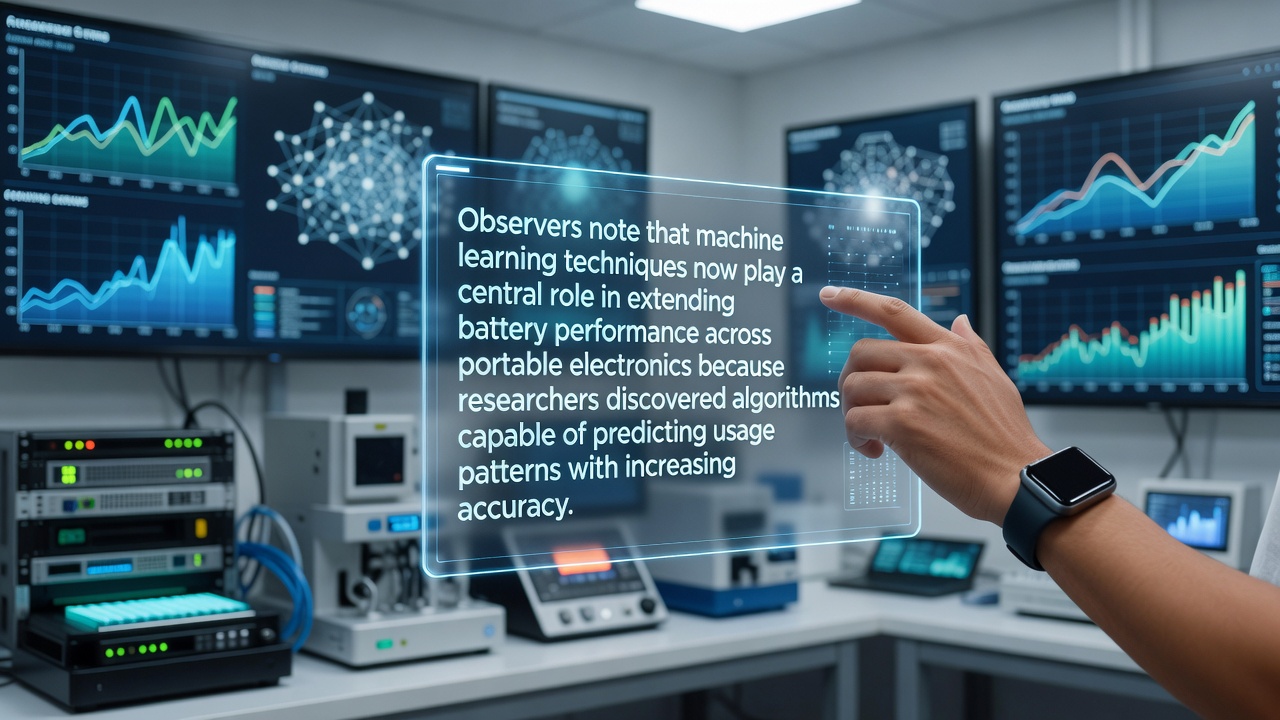
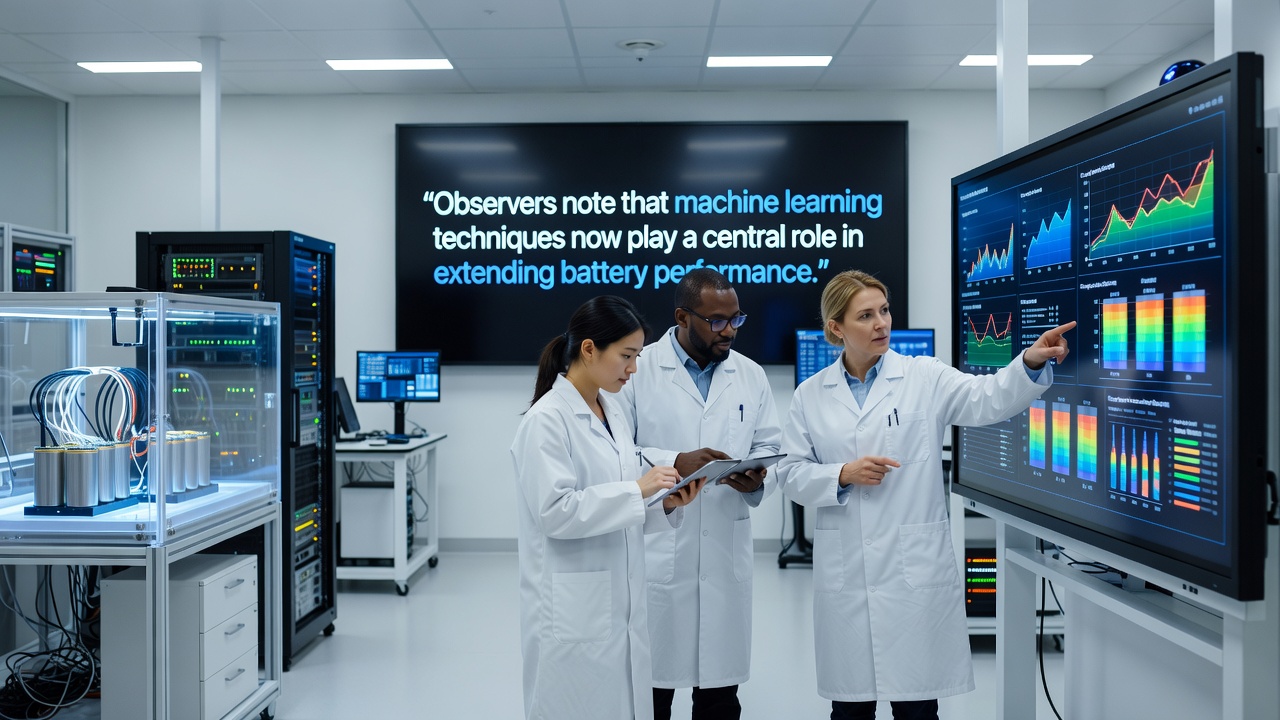
Observers note that machine learning techniques now play a central role in extending battery performance across portable electronics because researchers discovered algorithms capable of predicting usage patterns with increasing accuracy, and these systems analyze data from sensors, user habits, and environmental factors to adjust power allocation in real time. The approach integrates historical usage logs with current inputs such as location, app activity, and screen brightness so that devices can reduce consumption during low-demand periods while preserving capacity for intensive tasks.
Core Mechanisms Behind Predictive Battery Management
Researchers developed supervised learning models that train on datasets collected from millions of device sessions, allowing the algorithms to classify activities into categories like navigation, streaming, or idle states, and these classifications trigger specific voltage regulations or processor throttling that conserve energy without noticeable latency. Reinforcement learning variants further refine the process by rewarding actions that extend runtime, and over successive cycles the models adapt to individual user profiles while incorporating variables such as temperature fluctuations and network signal strength.
Data shows that early implementations in smartphones and tablets achieved measurable gains in daily endurance, with some models reporting up to 20 percent longer operation between charges when compared against static power management firmware. Industry reports from organizations like the U.S. Department of Energy highlight how these techniques scale across wearables and laptops, where battery size constraints make every percentage point of efficiency critical.
Integration Across Consumer Electronics Categories
Manufacturers embed these algorithms directly into operating systems and dedicated hardware accelerators, so that the prediction engine runs continuously yet consumes minimal additional power itself. In tablets used for productivity, the system anticipates document editing sessions followed by video calls and pre-allocates resources accordingly, whereas fitness trackers apply lighter models that focus on heart-rate monitoring intervals and sleep detection to avoid unnecessary polling of sensors.
What's interesting is how cross-device ecosystems benefit when a smartphone shares anonymized pattern data with paired headphones or smartwatches, creating coordinated energy strategies that prevent redundant connections or background syncing. European research initiatives funded through Horizon programs have documented similar outcomes in field trials across multiple device classes, confirming consistent improvements in both laboratory and real-world conditions.
By July 2026, several major platforms plan to release updated firmware that incorporates federated learning, enabling devices to refine local models without transmitting raw usage data to central servers, and this development addresses privacy concerns while maintaining prediction quality across diverse geographic regions and usage cultures.
Supporting Infrastructure and Data Requirements
Accurate forecasting depends on high-resolution telemetry streams that capture battery state-of-charge, discharge curves, and peripheral power draw at sub-second intervals, and cloud-based training pipelines aggregate these streams from opt-in users to improve global model performance. Academic studies published through institutions such as the University of Toronto emphasize the importance of diverse training populations, noting that models trained predominantly on urban data perform less effectively in rural settings with different connectivity patterns.
Hardware advancements including specialized neural processing units now allow on-device inference, reducing reliance on constant internet connectivity and lowering latency for immediate power adjustments. Trade groups representing semiconductor manufacturers report rising adoption rates of these units in mid-range devices, extending the technology beyond flagship products.
Challenges in Deployment and Ongoing Refinement
Model drift occurs when user behavior changes due to software updates or new applications, requiring periodic retraining that balances accuracy against computational overhead. Observers note that edge cases such as international travel or extreme weather can temporarily reduce prediction reliability until the algorithm incorporates sufficient new samples. Regulatory frameworks in Canada and Australia encourage transparency around data handling practices, prompting developers to implement clearer consent mechanisms and audit trails for machine learning components.
Yet collaborative efforts between academic labs and industry partners continue to address these limitations through hybrid approaches that combine physics-based battery models with data-driven predictions, yielding more robust results across varying chemistries and form factors.
Conclusion
The shift toward machine learning-driven battery management reflects broader trends in adaptive systems that respond dynamically to user context and hardware constraints. Continued progress depends on sustained investment in both algorithmic research and supporting sensor technologies, while geographic diversity in testing ensures models perform reliably across different markets and conditions. As deployment expands through 2026 and beyond, the cumulative effect on daily device usability becomes increasingly evident through aggregated performance metrics released by manufacturers and independent testing bodies.