Quantum Sensor Networks Reshape Real-Time Soil Monitoring in Precision Farming
Written by Quinn Lange · Aug 22, 2026
Quantum Sensor Networks Reshape Real-Time Soil Monitoring in Precision Farming
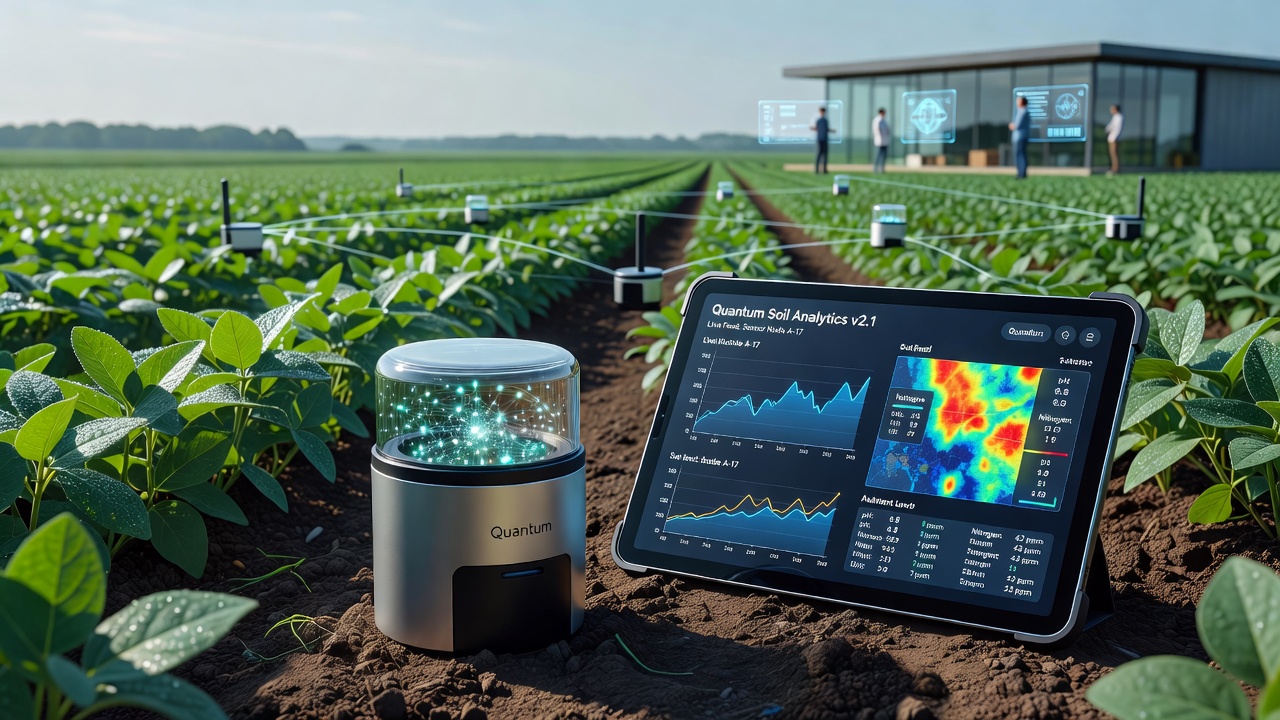
Quantum sensors operate by exploiting principles such as superposition and entanglement to achieve measurement precision that exceeds classical instruments by orders of magnitude, and these devices now form the backbone of distributed soil analysis networks in agriculture. Researchers at institutions across North America and Europe have documented how atomic magnetometers and quantum gravimeters detect subtle variations in soil magnetic fields and density that correlate directly with nutrient concentrations and moisture levels. Data collected at intervals as short as every few minutes feeds into centralized platforms that generate actionable maps for variable-rate fertilizer application and irrigation scheduling.
Technical Foundations of Quantum Soil Sensing
Traditional soil probes rely on electrochemical or optical methods that require physical contact and periodic calibration, whereas quantum sensors measure spin states of atoms or photons to infer properties without direct sampling. Nitrogen, phosphorus, and potassium levels alter local magnetic environments in measurable ways, and devices using nitrogen-vacancy centers in diamond detect these shifts at depths up to 30 centimeters. Field trials conducted by Australian research groups in 2025 demonstrated detection limits below one part per million for key ions, while Canadian teams reported similar accuracy for volumetric water content across clay-loam soils.
Networks integrate hundreds of these sensors across a single farm through low-power wide-area communication protocols, and the resulting datasets undergo real-time processing with machine-learning algorithms that distinguish between natural variability and management-induced changes. Calibration occurs against laboratory reference samples collected quarterly, ensuring long-term drift remains below 2 percent annually according to peer-reviewed reports from Wageningen University.
Deployment Patterns and Data Integration
Farms in the Midwest United States began scaling quantum sensor arrays in late 2024, and by August 2026 more than 1,200 sites across Iowa and Illinois operated continuous monitoring grids covering over 250,000 hectares. Each node transmits readings via LoRaWAN or NB-IoT to edge gateways that aggregate information before forwarding summaries to cloud platforms. Growers access dashboards that overlay sensor outputs with satellite imagery and weather forecasts, enabling decisions that reduce input costs while maintaining yield targets.
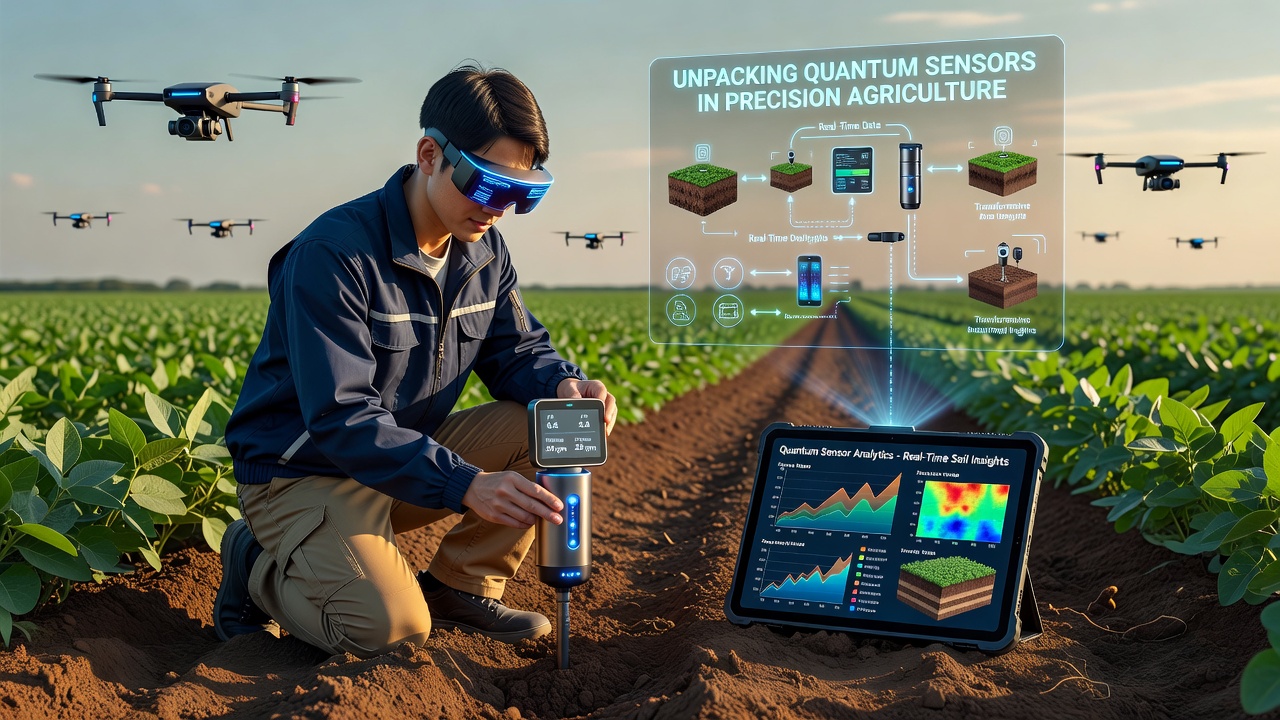
European Union-funded projects in the Netherlands and Denmark have connected similar arrays to national agricultural databases, and the combined datasets now support regional models predicting nutrient leaching risks during heavy rainfall events. Observers note that interoperability standards developed by the International Society of Precision Agriculture allow data from different sensor manufacturers to merge without format conversion losses. One study from the University of Saskatchewan revealed that farms using these integrated networks cut nitrogen applications by 15 to 22 percent in the first two growing seasons while sustaining corn yields above regional averages.
Performance Metrics and Limitations
Accuracy benchmarks published by the United States Department of Agriculture indicate quantum sensors maintain root-mean-square errors under 3 percent for soil moisture across temperature ranges from 5 to 35 degrees Celsius. Power consumption per node averages 0.8 watts during active sensing cycles, and solar-recharged batteries sustain operation for at least 18 months without replacement. Interference from overhead power lines or dense vegetation can degrade signal quality, yet shielding techniques and adaptive filtering algorithms have reduced such effects to negligible levels in most commercial installations.
Cost remains a barrier for smaller operations, with current per-node prices ranging between 1,200 and 2,500 dollars depending on depth rating and communication options. Industry reports project a 40 percent reduction in unit costs by 2028 once production volumes increase and fabrication processes mature. Maintenance schedules call for annual firmware updates and biennial laboratory recalibration, and service contracts offered by equipment providers cover both tasks.
Conclusion
Quantum sensor networks supply continuous, high-resolution soil data that classical methods cannot match in temporal or spatial density. Adoption continues to accelerate across major grain-producing regions, supported by improving hardware reliability and expanding data infrastructure. As calibration protocols standardize and costs decline, these systems are expected to integrate more deeply with autonomous machinery and predictive analytics platforms.