Tracing Ties Between Protocol Innovations and Mobile Device Efficiency Benchmarks
Written by Yara Washington · Jul 9, 2026
Tracing Ties Between Protocol Innovations and Mobile Device Efficiency Benchmarks
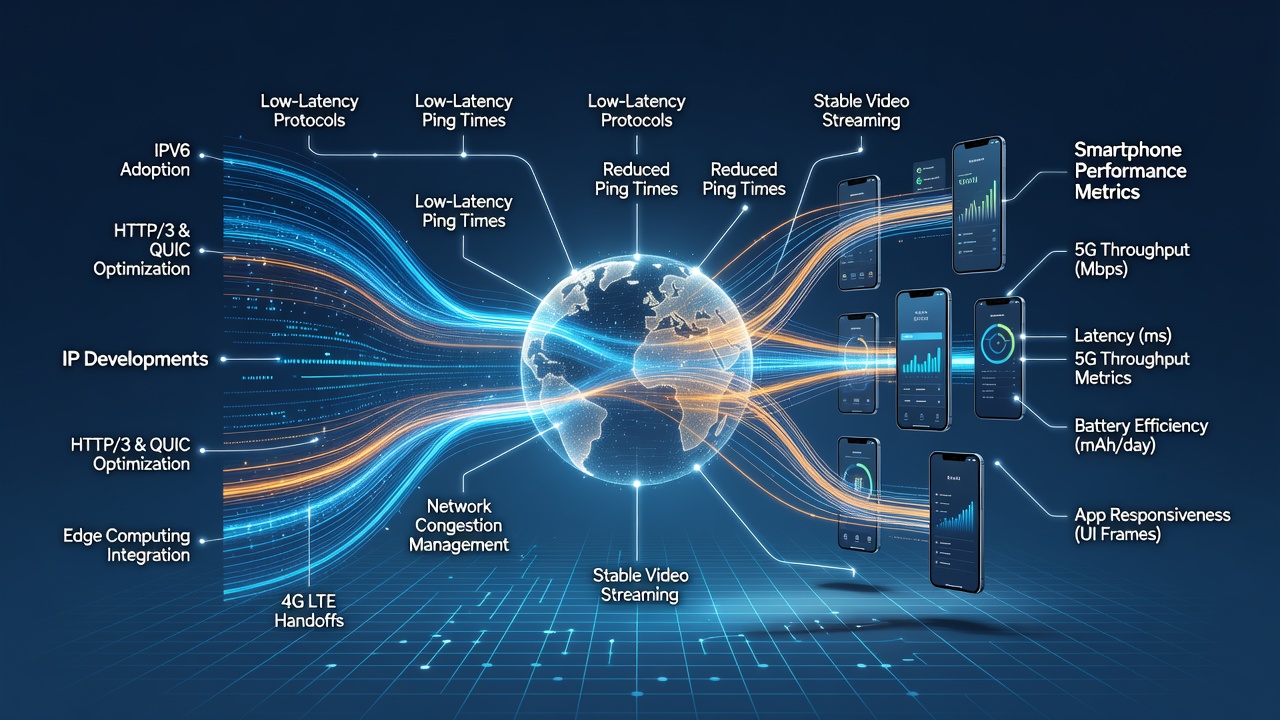
Internet protocol developments have shaped smartphone performance metrics through successive refinements in data handling, transmission efficiency, and resource allocation, with observers noting measurable shifts in latency, throughput, and energy consumption as new standards gained adoption. Researchers have documented how transitions from IPv4 to IPv6 reduced header overhead in many network scenarios, leading to streamlined packet processing on mobile devices and corresponding gains in connection setup times across global networks.
Early Protocol Foundations and Initial Mobile Metrics
Initial internet protocols established core mechanisms for addressing and routing that carried forward into smartphone ecosystems, where experts observed direct effects on early device benchmarks such as data transfer rates and session stability. Studies from academic institutions revealed that TCP congestion control algorithms influenced battery drain patterns during prolonged downloads, prompting manufacturers to optimize radio interfaces accordingly while IPv4 address exhaustion accelerated the push toward dual-stack implementations.
By the mid-2010s, protocol updates incorporated better support for mobile environments, and data from industry reports indicated corresponding improvements in average throughput metrics for LTE-connected devices. Those who analyzed packet traces found that refined error correction reduced retransmissions, which in turn lowered CPU utilization on smartphones during high-mobility scenarios.
QUIC Protocol and Shifts in Connection Performance
The introduction of QUIC as a UDP-based transport layer alternative brought notable changes to how smartphones establish and maintain connections, with performance metrics reflecting faster handshake completions and reduced head-of-line blocking compared to traditional TCP approaches. Research indicates that QUIC adoption correlated with lower latency figures in applications requiring frequent server interactions, particularly on networks with variable signal quality.
Figures from network monitoring projects show that devices leveraging QUIC experienced measurable drops in energy consumption during web browsing sessions because fewer round trips translated into shorter radio-on periods. Observers tracking these developments across regions noted that implementation details varied by operating system, yet consistent patterns emerged in reduced packet loss recovery times.
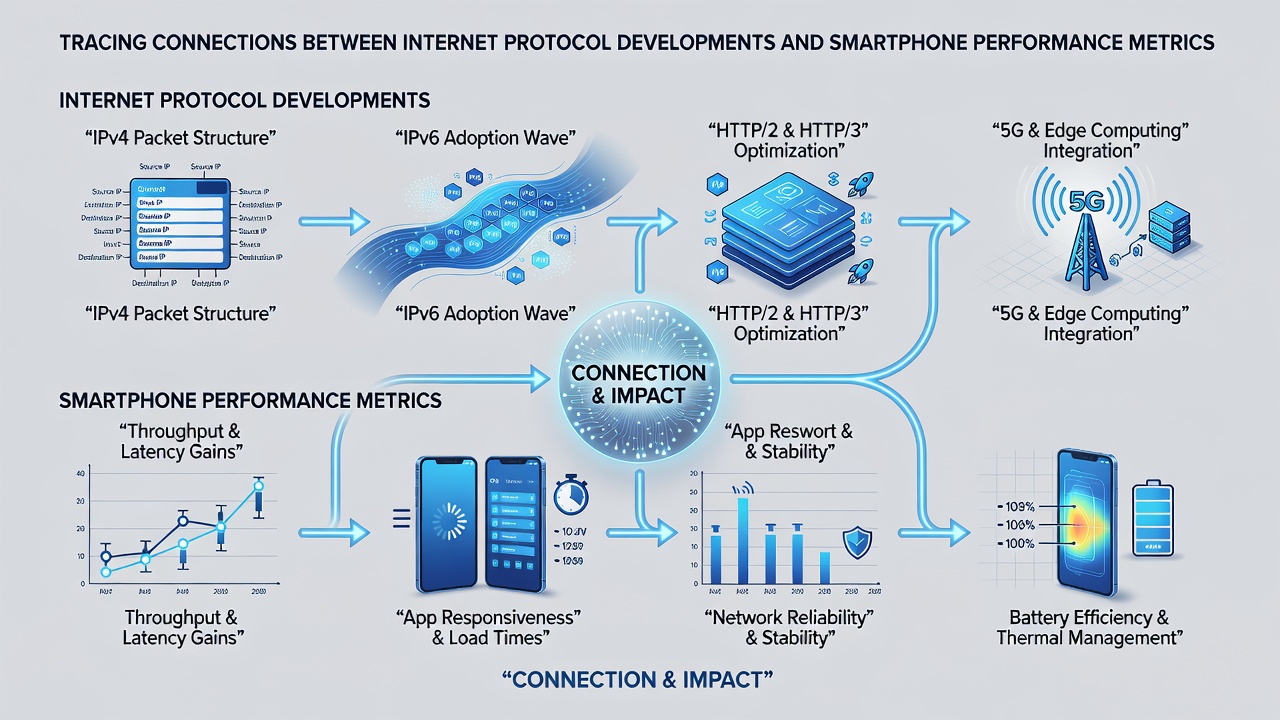
As of July 2026, deployment data continues to highlight QUIC integration in major mobile browsers, where benchmark tests record sustained gains in page load speeds alongside stable throughput under congested conditions. Academic analyses from multiple universities have linked these protocol features to broader efficiency benchmarks that include both network and processor load measurements.
IPv6 Expansion and Resource Allocation Outcomes
IPv6 rollout expanded address space while altering routing behaviors, and performance records from carriers demonstrate impacts on smartphone metrics such as connection persistence and multicast efficiency. Data collected by regulatory bodies in the European Union and Australia shows that IPv6-enabled devices often register lower signaling overhead during handovers between cell towers, contributing to smoother continuity in streaming and real-time communications.
Analyses conducted by research groups found correlations between IPv6 transition mechanisms and fluctuations in memory usage on mobile platforms, particularly when handling larger address formats alongside legacy compatibility layers. These findings align with observations from Canadian network studies that tracked battery performance across mixed IPv4 and IPv6 environments.
HTTP/3 Integration and Throughput Measurements
HTTP/3 built upon QUIC foundations to further optimize content delivery, and smartphone performance logs reveal enhancements in parallel stream handling that affect both speed and resource metrics. Industry organizations tracking protocol deployment report that devices using HTTP/3 exhibit improved resilience to packet reordering, which supports higher sustained throughput during media consumption without proportional increases in power draw.
Evidence from longitudinal studies indicates that these layered protocol advancements collectively influence aggregate metrics like effective data rate per watt consumed, guiding firmware updates that align radio and processor behaviors more closely with modern transmission standards.
Conclusion
Protocol developments continue to intersect with smartphone performance metrics through incremental refinements that affect latency, energy use, and data efficiency, as documented in ongoing research and deployment statistics. Observers tracking these connections note that future iterations will likely extend similar influences as networks evolve further.