Unpacking the Convergence of AI Advancements and Common Internet Utilities
Written by Katja Albrecht · Aug 1, 2026

Unpacking the Convergence of AI Advancements and Common Internet Utilities
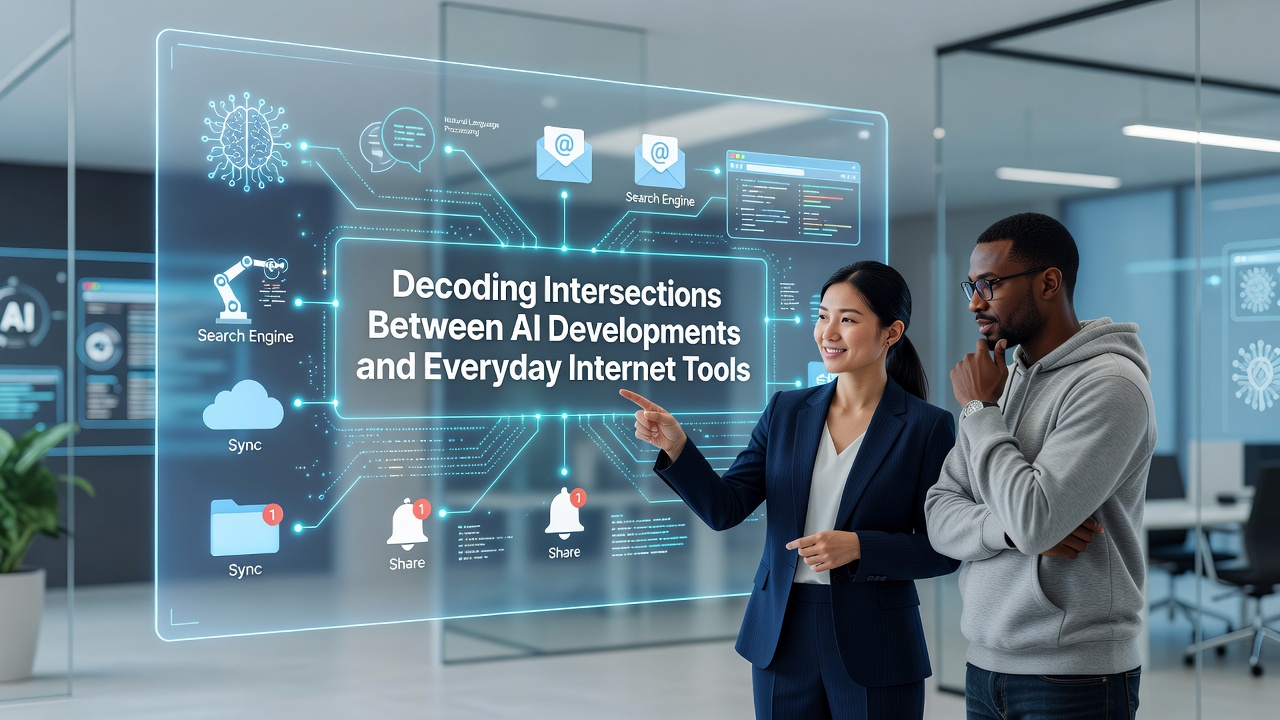
Artificial intelligence continues to integrate with standard internet utilities through pattern recognition systems and predictive algorithms that adjust user interfaces in real time. Search engines now incorporate large language models to generate summaries from indexed pages while email platforms apply natural language processing to sort incoming messages and suggest responses based on historical patterns.
Search Engine Modifications Through Machine Learning
Developers at major search providers have embedded transformer-based models into ranking systems since 2023 and these updates allow results to surface contextual information rather than isolated links. In August 2026 data from industry reports indicated that query volumes processed with AI assistance exceeded 65 percent across leading platforms and users encountered fewer repetitive listings because models reranked content according to session context. Observers note that navigation tools within browsers also receive similar enhancements where address bars predict destinations from partial inputs and cache frequently visited domains through reinforcement learning loops.
Communication Platforms and Automated Assistance
Email clients apply classification models to detect spam while simultaneously drafting replies that match the tone detected in prior exchanges. Calendar applications cross-reference meeting invites against user availability and location data to propose optimal times without manual entry. Those who manage multiple accounts find that unified inboxes now route messages across services using entity recognition that identifies names, dates, and action items automatically. Research indicates that productivity metrics collected by software vendors show measurable reductions in time spent on routine correspondence when these features remain active.
Content Management and Recommendation Systems
Social media feeds rely on collaborative filtering combined with computer vision to prioritize images and videos likely to retain attention. Streaming services analyze viewing histories alongside demographic signals to assemble playlists and thumbnail variations that test higher engagement rates. News aggregators deploy topic modeling to cluster articles and surface updates from multiple outlets on the same event. Data shows these mechanisms operate continuously and adjust within minutes of new content uploads.
Security Protocols Enhanced by Anomaly Detection
Browser extensions and operating system utilities employ unsupervised learning to flag unusual login attempts and block phishing domains identified through graph analysis of known malicious sites. Password managers generate and store credentials while monitoring for reuse across services through hashed comparison techniques. Network monitoring tools at internet service providers apply similar models to detect distributed denial of service traffic and reroute packets before service disruption occurs. Figures from regulatory filings reveal that automated threat responses handled the majority of incidents reported in 2025 without human intervention.
Regulatory Developments and Standardization Efforts
Government agencies have begun issuing guidelines on transparency requirements for AI components embedded in consumer tools. The European Commission published updated documentation in early 2026 that outlines disclosure obligations for automated decision systems affecting user content visibility. Canadian authorities released parallel recommendations focused on data provenance standards for training datasets used in recommendation engines. Academic studies from institutions in Australia examined bias metrics in search result distributions and proposed evaluation frameworks that vendors can adopt voluntarily.
Hardware and Infrastructure Considerations
Edge computing devices now execute lightweight inference models locally for tasks such as real-time translation within video calls and image upscaling in photo galleries. Cloud providers allocate dedicated GPU clusters to handle batch processing for consumer applications during peak hours and load balancing algorithms distribute requests to minimize latency. Energy consumption reports compiled by data center operators indicate that optimized model architectures have reduced power draw per query even as overall usage volumes increase.
Conclusion
Current intersections between artificial intelligence developments and everyday internet tools rest on incremental improvements to existing infrastructure rather than wholesale replacement of established systems. Observers continue to track how model updates propagate through utilities that millions access daily while standards bodies refine expectations around accountability and performance measurement.