Wearable Health Monitors and the Evolution of Biometric Privacy Measures
Written by Quinn Lange · Aug 20, 2026
Wearable Health Monitors and the Evolution of Biometric Privacy Measures
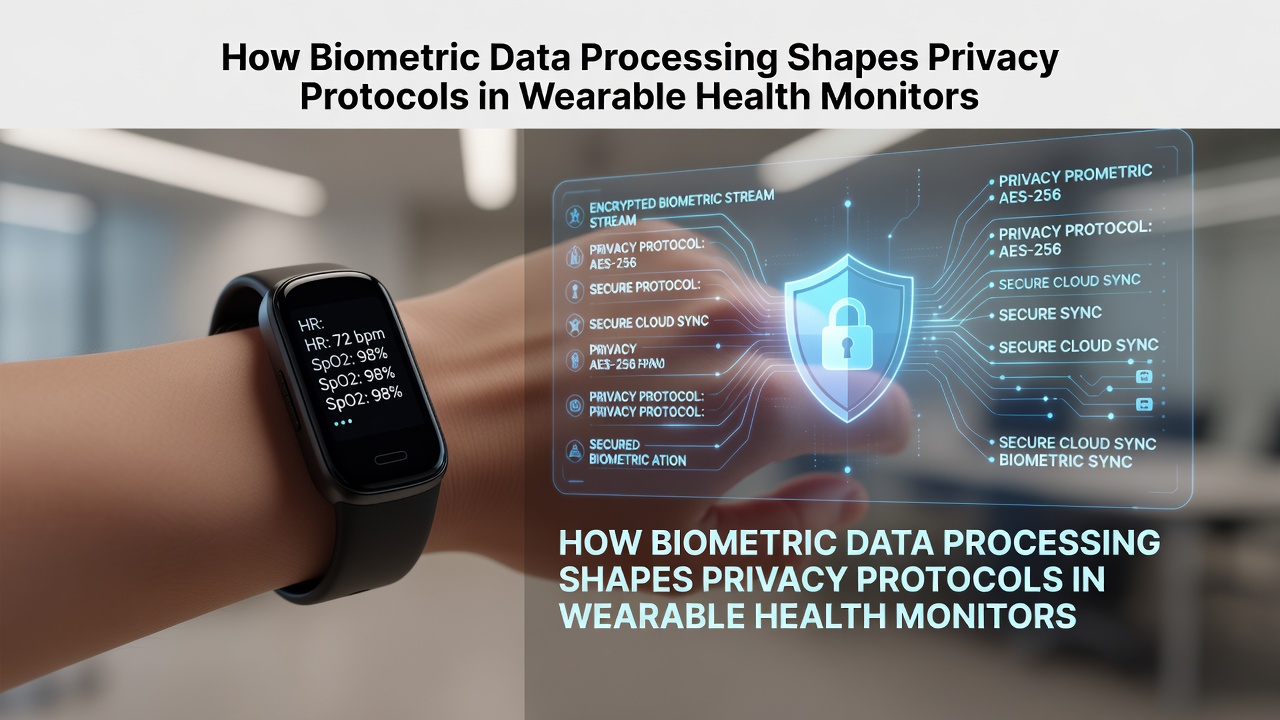
Biometric data processing in wearable health monitors involves continuous collection of heart rate, blood oxygen levels, sleep patterns and activity metrics through sensors that transmit readings to companion applications and cloud servers, and this workflow directly influences the design of privacy protocols that companies must implement to handle sensitive personal information. Researchers have documented how raw biometric signals undergo edge computing on the device itself before selective transmission occurs, which reduces exposure windows while requiring encryption standards that meet regulatory thresholds across multiple jurisdictions.
Data Collection Pathways and Initial Safeguards
Modern devices from major manufacturers route biometric streams through on-device processors that apply anonymization techniques before any data leaves the hardware, and studies indicate this approach limits the volume of identifiable information shared with third-party analytics platforms. Organizations such as the U.S. Food and Drug Administration have issued guidance requiring manufacturers to document these processing steps in premarket submissions, while equivalent bodies in Canada and the European Union enforce similar transparency obligations through their respective medical device frameworks.
Users grant permissions via mobile interfaces that record consent timestamps and data categories, yet the underlying architecture must accommodate revocation requests that trigger immediate deletion across distributed storage systems. Observers note that firmware updates in August 2026 introduced refined token-based authentication layers, allowing devices to verify processing partners without exposing full user profiles during routine synchronization cycles.
Regulatory Frameworks Shaping Technical Standards
Legislation including the Health Insurance Portability and Accountability Act in the United States, the General Data Protection Regulation across European member states, and the Personal Information Protection and Electronic Documents Act in Canada establishes baseline requirements for biometric handling that wearable companies translate into specific technical controls. FDA digital health resources outline expectations for cybersecurity documentation, whereas parallel documents from Health Canada emphasize lifecycle management of personal health data collected by connected sensors.
These rules drive adoption of differential privacy methods that inject statistical noise into aggregated datasets, thereby preventing re-identification while preserving utility for population health research. Engineers integrate these techniques at the point of data aggregation on central servers, and reports show measurable reductions in linkage risks when such methods are applied consistently across firmware versions released after 2024.

Technical Implementations in Current Devices
Encryption protocols such as AES-256 protect data both at rest and in transit, while secure enclave chips isolate biometric templates from the main operating system to limit access by applications or potential malware. Companies have deployed federated learning frameworks that train algorithms on decentralized datasets without moving raw records, and academic analyses confirm this architecture maintains model accuracy while satisfying cross-border data transfer restrictions.
Access logs maintained by cloud providers record every query against stored biometric records, enabling audit trails that regulators examine during compliance reviews. When anomalies appear in these logs, automated systems trigger alerts that prompt immediate review and potential suspension of the implicated processing node, and such mechanisms have become standard in platforms updated during 2025 and 2026.
Emerging Practices and Industry Responses
Trade associations representing sensor manufacturers collaborate with standards bodies to publish interoperability guidelines that embed privacy-by-design principles from the hardware level upward. These documents recommend granular permission models allowing users to select which biometric categories remain local versus those shared for clinical feedback loops, and several device lines released in 2026 already incorporate these selectable tiers.
Independent testing laboratories evaluate whether claimed anonymization holds under adversarial attacks, and published benchmarks reveal that certain noise-injection parameters outperform others in resisting reconstruction attempts. Manufacturers adjust their default settings based on these findings before distribution, ensuring alignment with evolving interpretations of existing statutes rather than awaiting new legislation.
Conclusion
Biometric data processing continues to dictate the specific privacy controls embedded in wearable health monitors through a combination of regulatory mandates, technical standards and iterative engineering responses. As devices gain additional sensing capabilities, the same processing pipelines will require further refinement to maintain compliance across jurisdictions while supporting legitimate health insights derived from the collected information.